English
  فارسی
فارسی 

The human’s mystery is much older than organizations. Organizations include people, so understanding the concept of these emerging phenomena depends on people.
Through time and mind evolution, the unknown and deep sides of human beings became more noticeable and its effect on forming the organizations is more important. As a result, going through the surface to the depths to discover employees’ talents in the companies is essential to take the most advantage of their talents.
History shows that the administrative department in companies have changed for several times, first to human resources department and then to deputy CEO after a development in the scope of its responsibilities.
Nowadays, after a sudden change in the external and internal business environment, the human resources department in organizations faced some vital questions and challenges.
Some tasks such as hiring and payment, which used to be done in traditional form, are being automated, electronized and outsourced. Human resource department cannot limit itself to the expertise and traditional administrative activities and the competencies which used to be enough for the task is not sufficient anymore. Human resource managers cannot be satisfied with activities and values which were defined and offered in the past, and expect not to be faced with the expectations of employees.
It seems necessary to revise the activities of human resource managers. Nowadays, value creation is defined as the basement of human resources by the “recipient” not the “presenter” and it includes the company’s employees, stakeholders, managers and customers. The human resources reputation is no longer for the traditional tasks, but for providing the company’s stakeholders with the added values.
Human resource must arrange its activities in the same line with business strategy, communicate well with the CEOs, line managers, customers and investors, pay attention to the external business realities, be a business partner, a change manager and earn the necessary competencies for all above roles. It must focus on values and pay attention to things like organizational and individual capabilities.
In the last two decades of our professional life, we have observed fundamental changes in human resources and attended hundreds of companies and evaluated the effectiveness of human resources and gave advice for their improvement. In the 1990s, I wrote “The Human Resource champions”, which discusses human resource achievements and sets four roles for human resource managers:
- Staff champion
- Office expert
- Change factor
- Strategic partner
When HR managers play these roles, their focus is more on outcomes not activities.
Employee champion provides the organization with committed employees.
The office expert performs productive human resource tasks.
The change expert is responsible for a productive change in employees’ attributes and the organization’s culture.
The strategic partner supports the achievements of the company.
In the early 2000s, with Norm Smallwood, in our book, we discussed that organizational capabilities are created through investing in human resources. Capabilities which lead to values including talent, speed, cooperation, accountability, having the same mind framework, training, and leadership. HR managers are one of the achievements of HR function by creating organizational capabilities.
What will happen and remain when human resource management activities are automated, centralized, eliminated or outsourced? This is the concept of this article: “Human Resource Value proposal”.
We tried to work on these questions and ideas, so we asked other questions in which we are going to face in future:
- Why is human resources essential today?
- How can I convince the line manager to pay more attention to human resource issues?
- What specific things can human resources do to communicate well with customers, employees, investors and line managers?
- How can we create a strong view for the relationship between business strategy and human resources?
- How do we organize our human resource function, especially after outsourcing administrative tasks, to achieve human resources goals?
- What does human resources do to generate values?
- What is human resource managers’ role?
- What kind of knowledge, skills and abilities should human resource managers maintain to influence business performance?
- How can we help human resources department to gain all above things?
We face these questions after re-engineering, automation or outsourcing human resource activities.
We believe that HR managers should focus more on “achievements” than “activities” and that the main achievements are the capabilities of the organization which define the identity of the organization and offer high performance to all stakeholders. We understand that HR leaders can effectively align activities with business strategy, more effective than those who do not do these tasks, as long as they show their competencies well. We know that by creative minds, these beliefs will become actions to generate values. Finally, we know that this is a golden opportunity to be a good human resource manager.
The main idea of this article is obvious. Human resources must create values for the benefit of investors and customers, line managers and employees. It should be organized and perform strategies to create value by achieving business results effectively.
Value is the basement in human resources point of view. The human resource value shows how human resource units can create sustainable value.
Although the program policy statement is very important, what is essential is the recipients’ income from these activities.
While resources are becoming increasingly scarce, activities that are unable to create added value are not worth a penny. It does not matter how interesting and valuable an activity may seem: if the person who receives the result of that activity is not satisfied, the continuation of the activity will not be justified. “Human resource value creation proposal” means that the activities, units and managers of human resources create a positive achievement for the main stakeholders, including employees, line managers, customers and investors.
Value has become the human resources priority. Whenever others receive value from human resource actions, human resources will be respected and effective. It is an important principle that human resource job starts with business not with human resources.
Human resource managers must be able to answer these questions:
- What goods and services should my company produce to make customers buy from me instead of my rivals?
- What capabilities should our people have, to respond the short-term and long-term market demands?
- How to invest in human resources to achieve business results?
- How should we organize human resource activities to achieve maximum value? To answer these questions, we need to create
The HR value proposition:
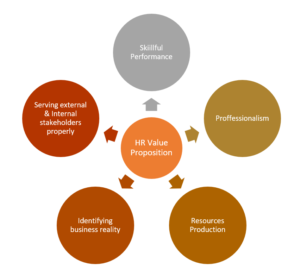
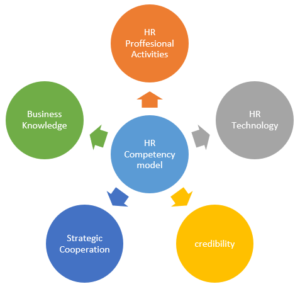
Human resource managers must have a thorough knowledge of the realities of the business, know the stakeholders of the organization and be aware of their expectations, perform human resource activities skillfully and act as a professional. So, human resource managers must have several competencies which are the necessities of the task.
by Ahmadreza Ahrarnejad
From the book “The HR Value Proposition” by Dave Ulrich and Wayne Brockbank
This post is also available in: Persian